Showing posts with label Pakistan. Show all posts

Wednesday, March 31, 2021

The Politics of Fiscal Sentiments in Pakistan

From the series: Majoritarian Politics in South Asia, Society for Cultural Anthropology

By Noman Baig, Habib University

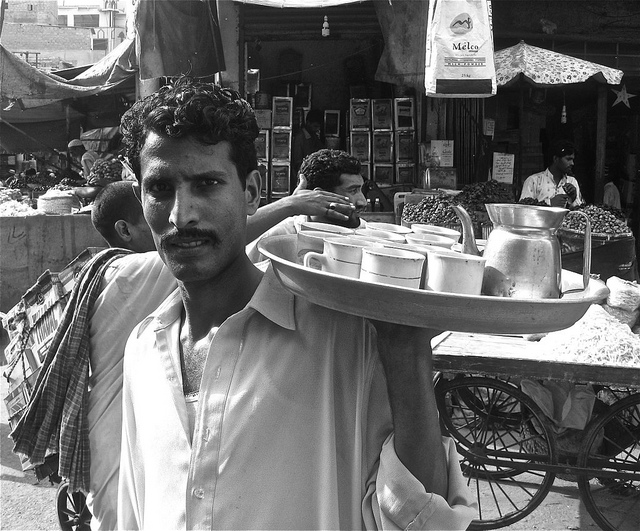
Photo by Mythri Jegathesan.

In March 2015, Ayyan Ali, a Pakistani supermodel, was arrested at the Islamabad International Airport for attempting to carry half a million dollars in cash onto a flight to Dubai. Ayyan’s arrest quickly became a national sensation once rumors and reports that she was laundering money for prominent politicians and businessmen began to circulate. Public interest and outrage only intensified when the customs officer who had confiscated the money was murdered soon after Ayyan’s arrest. The involvement of a glamorous model, foreign currency, political corruption, Dubai (a dreamland of sorts for the majority of Pakistanis), and now murder ensured that the case dominated the news cycle in Pakistan for months on end.

Ayyan’s glamorous lifestyle—the parties she attended, the men she dated, the clothes she wore, the brands she endorsed—had been the subject of much discussion in Pakistan even before her arrest. The fact that she was caught carrying so much money thus seemed entirely reasonable (if still scandalous) given the elite social circles of which she was part. This was, many ordinary commentators at the time mused, exactly the kind of salacious affair in which the rich would be involved. The misogynistic media coverage of the case, which focused on Ayyan’s body, clothing, tattoos, and makeup, only strengthened ordinary people’s conviction that Pakistani elites were dissolute. Ayyan’s case became emblematic of what many in Pakistan believed was an ayyash—debauched—society. The Urdu term ayyashi describes a transgressive excess, a hedonism that is thought to defile the very soul. For many ordinary people in Pakistan, Ayyan’s ayyash lifestyle and her eventual arrest mirrored the malaise in which the country itself was mired. Ayyan’s arrest had only revealed the already fraying moral-ethical boundaries of the nation.

The scandal raked up by Ayyan’s arrest played an important role in setting the stage for Imran Khan’s victory in the 2018 national election. In speeches leading up to the election, Khan cited Ayyan’s case as an example of the deep political and moral corruption that needed to be rooted out in order to build a “naya” or new Pakistan. He laid particular emphasis on Ayyan’s alleged links with former Prime Minister Nawaz Sharif, whom he variously called “a mafia don” and “the grandfather of corruption.” Indeed, when Ayyan was eventually granted bail, Khan claimed that the judicial decision was the outcome of a “deal” between political rivals Nawaz Sharif and Asif Zardari. Corruption, he seemed to suggest, was the one thing that could smooth over even the most long-standing antagonisms.

It was precisely this shared bond of corruption that Khan vowed to break if elected prime minister. As a start, Khan promised, the PTI (his political party) would bring back the two hundred billion dollars of national wealth that corrupt politicians had supposedly siphoned off and stashed in illegal bank accounts in Switzerland and Panama (see note 1). This promise resonated deeply with many ordinary Pakistanis who viewed corruption as a theft of their dreams and aspirations. What was being stolen by politicians was not just money, but Pakistan’s future, its very possibility of becoming a prosperous nation. By the same token, what Khan promised to restore was not just Pakistan’s fiscal balance, but also its diminished purity and strength.

Read the full blogpost here: https://culanth.org/fieldsights/the-politics-of-fiscal-sentiments-in-pakistan


Notes

1. This massive figure is based on debunked news reports.

Tuesday, August 22, 2017

Financial Inclusion: Integrating the Poor into the World Economy – A Look at Migrant Laborers in a Karachi Marketplace and How They Move Money

by IMTFI Fellow and International Board Member Noman Baig, Habib University

Vendor at Jodia Bazaar, Karachi 
My interest in money stems from the incidents of 9/11 in the United States. After the attacks in the US, all major governments and international organizations passed stringent laws against informal money transfer channels labeled as funding terrorism all over the world. In Pakistan, the state curtailed the illegal funds transfer channel known as hawala by arresting prominent currency dealers and passing the Anti-Hawala Act. A hawala channel is a monetary network/practice that relies on centuries-old kinship bonds for transferring value without moving physical cash from one place to another. In place of these informal and embedded monetary channels, the state opened up a market for multinational corporations such as Western Union and the branchless banking sector to integrate hitherto unbanked people into the gambit of modern finance under the national strategy called “financial inclusion.”

Despite the state’s coercive crackdown on moneychangers and moneylenders in the country’s local bazaars, the lower-income labor class continues to depend on such informal money channels to send and receive money. These personalized networks allow them to feel secure that the money will reach its destination safely. I conducted ethnographic research in Karachi’s marketplace, Bolton Market, the largest wholesale bazaar of a variety of commodities such as skin care, spices, fabric, steel, medicine, etc. While the merchant community was under the direct surveillance of the state security agencies, the laborers were freely moving their funds.

An archeology of funds transfer methods in Karachi’s Bolton Market

Bolton Market, Karachi 
During my research in these markets, I have discovered an archeology of funds transfer methods. I call it an archeology because there are layers of channels, often superimposed on each other, cross-cutting in many cases, and undermining each other at various intervals. It can be called a gradation of financial channels. For example, an informal hawala transfer made through a local money changer passes through a kinship channel, but at some point in a long chain the same transaction will intermingle with the formal banking system. If the transaction raises a suspicious activity report, then the Federal Investigation Agency (FIA) will examine it before the funds reach their final destination.

Jodia Bazaar, Karachi
Financial practices in Karachi’s marketplaces are a lattice work, convoluted, and rhizomatic, making the location of the sources of a transaction by the researcher a dizzying task. In just a single transaction the number of actors involved can include a number of players, such as banks, moneychangers, security agencies, merchants, etc. Sometimes transactions may include shrines, mosques, and charity organizations by virtue of the mere fact that the gift economy and commodity exchange are so tightly knit. Thus it becomes extremely difficult to neatly categorize and differentiate one method of financial transfer from another. In fact, it is also incorrect to use labels such as “informal market,” which according to recent estimates is 75-90% larger than the size of the “formal economy.” To be very clear, “informal” does not mean that the market operates haphazardly, randomly, or irrationally, though it is the kind of impression we generally get when we hear the word informal. In fact, the informal market, if it can be neatly categorized as informal, does not operate outside of the formal market. Both domains intermix with each other at multiple locations.

Bhandari’s story – Considering migrant laborers in Karachi

The research I conducted engages with these multiple methods of funds transfer. One of the channels often used by laborers in Bolton Market involves a kin-based network of largely Pakhtun migrant workers in Karachi.  One of the laborers who I became friends with is called Khan Zareen, also known as Bhandari in the market. Bhandari arrived in Karachi as a porter in the early 1980s. He started working in the city’s vegetable market (sabzi mandi) loading and unloading vegetables and fruit on his back. After the resettlement of the vegetable market to the outskirts of city, Bhandari decided to work in Bolton Market, where he started hauling heavy boxes to and from the warehouse.

Vendor at Jodia Bazaar, Karachi
My encounter with Bhandari was sudden and unexpected. One day while loading boxes on the cart to take it to bus station, he came to hear, rather incorrectly, from a shopkeeper that I was a journalist writing a story about the markets. Bhandari came rushing into the office and instructed me to write about his suffering and condition. “Our houses have been destroyed in Bajaur, and we never got any compensation from the government, while the landowners (malik) are constructing new palatial houses,” he said.  These were the first words that Bhandari uttered to me bluntly. Initially I responded to him by saying that I would tell his story, but that he would have to give me more details. As the days passed, we became friends. Every time I would visit Bolton Market, we would go to a chai dhabba (tea shop) for a cup of tea.

One day Bhandari showed me how he transfers money to his home in Bajaur. He took me to another Pakhtun porter, who is known as Laal Zeb. Bhandari handed over cash to Zeb and told him to deliver rice, ghee, wheat, and sugar to his home. Laal Zeb took the cash and called his brother in Bajaur who owns a food ration shop in the village. The next day, Zeb’s brother delivered the goods at Bhandari’s house. There were no fees or charges for any part of the entire transaction. Bhandari was able to buy food items for his family from Karachi, while Zeb collected the cash for his brother’s shop in the village. However, when Bhandari sends cash to the village via a moneylender/shopkeeper, he has to pay Rs. 30 for every Rs. 1000 (which is still half of what branchless banking services such as Easypaisa charge their customers). These are personalized networks operated mainly by village communities who are spread across rural and urban Pakistan. Porters such as Bhandari never go to the bank. Several years ago, with the aid of the state officials, he managed to open a bank account in a local bank branch in Bajaur to receive government compensation for the reconstruction of his house, but after several years the bank account is still waiting to receive funds from the government.

I asked him why doesn’t he use new services such as Easypaisa—Pakistan’s largest branchless banking network—to send money. He replied, “Easypaisa charges Rs. 60, while I pay Rs. 30 on every Rs. 1,000. Also nobody in my home can get to an Easypaisa shop, which is outside of the village.” In conservative tribal areas women are not allowed to go outside alone. Bhandari has no male family members living in the village; his two sons who are 22 and 14 also work in Karachi.

Although Easypaisa has become a phenomenal success among the laboring classes in Karachi, and in Pakistan in general, Pakhtun laborers in Bolton Market continue to use the old ways of sending and receiving money. They use personalized channels such as Laal Zeb not only to transfer value, but also to solidify affective bonds, social relationships, and ethnic ties. These symbolic values play a determining role in maintaining community boundaries. In an Easypaisa store, affective and ethnic relations are rendered unnecessary, while the rationalized market ethos of efficiency, security, and instant transaction takes precedence.

Vendor at Jodia Bazaar, Karachi
Laborers such as Bhandari constitute the majority of Pakistan’s working class who survive on less than $2/day. It is this sector of the population that is seen as existing outside of the “real” economy, the domain of modern, “formal,” rational, and bureaucratic finance propelled by identity cards, paperwork, written records, and a survivalist ethos. The recent financial sector development policies and practices are an effort to bring laborers like Bhandari under the umbrella of the state and the corporate economy through giving them easier access to savings, loans, and credits. One of the ways proposed to implement this is to initiate a network of branchless banking or retail agent banking. The state and corporations justify these efforts as a favor to laborers, a remedy for alleviating their so-called “miserable” conditions through the cure of financial inclusion.

Expanding the Discourse on Financial Inclusion

The agenda of financial inclusion to offer easy access to savings, loans, and credit to the masses, is fraught with inequalities and injustices. This is not to say that the laborers should cease using branchless banking. But to charge heavy fees for the services owned by a foreign corporation proves how terms of trade set during the colonial era continue to extract surplus value from the bones and flesh of the laborers. Most importantly, if international developmental organizations such as the World Bank are seriously interested in improving the financial conditions of the poor by bringing them inside of modern finance, then they should start by identifying the actual root causes of their exclusion. If they want to include these people, then the governments need to start a radical program of wealth redistribution through policies that allow its more even distribution. In other words, the poor masses all over the world are excluded because the wealthy few hold the wealth of 99 percent of the people. The majority will always stay excluded, and any financial inclusion program will fail miserably, unless a just economic system comes into place.

Laborers near Urdu Bazaar, Karachi
The discourse of financial inclusion therefore demands a critical scrutiny in light of the developmental ideology propagated in the postcolonial world. With the beginning of modern colonialism in the mid-eighteenth century, such efforts at integration and inclusion have resulted in an imbalanced power structure and income inequality at a global scale. For instance, in British India, colonial rule forced the integration of the vast land of the Indian subcontinent, and its markets, its weavers and peasants, into the international markets. The outcome was horrendous, and resulted in the siphoning of wealth and resources from the colonies to the metropolis. Thus this is not the first time that a serious effort at integrating the masses into the world economy has been undertaken. The postcolonial world has been experiencing such programs of integration for at least the last two hundred years, often with disastrous consequences.

Stay tuned for a blogpost insights from "Financial Inclusion of the Poor workshop" in Karachi, Pakistan.
Photos credits: Noman Baig 

Wednesday, April 20, 2016

Off the Charts: Session Two of the 2016 Conference


In the panel on "Ecologies in Crisis: Transferring, Converting and Marketing Value in Unstable Times" with discussant Rosa Akbari of the International Rescue Committee stories of crisis and resilience turned out to encompass a wide variety of political and natural disasters.  As Akbari noted, when it comes to understanding creative responses to precarity in developing economies from the position of the developed world, "we have a lot more to learn from them."  The first presentation on "Managing, negotiating, and converting 'currency' in daily life in a multicurrency environment of Zimbabwe" by Innocent Tonderai Mahiya of Women's University in Africa and Simbarashe Gukurume of the University of Cape Town grappled with the effects of a "serious economic crisis," where "the worst inflation in the world for a country not at war" had created a country of "poor billionaires," where daily 50 thousand withdrawal limits cripples those earning salaries of 50 billion units in local currency.

The research team provided an overview of money providers.  EcoCash, the most widely used mobile money service in the country, launched in 2011.  It was subsequently joined by NetOne, which introduced the government-controlled OneWallet in 2013.  With Telecash, which is now the second-largest provider in the country, there are three giant telecommunication companies joined by other stakeholders and players in a growth environment in which the largest companies have over six million subscribers.  Thus this national mobile money environment could be compared in scale to the territories of the M-PESA model, which the research team attributed to the rapid introduction of mobile money services, which rapidly expanded in urban and rural areas.  Additionally mobile networks are seen as reliable by informants with an increased number of players in mobile money sectors.  Access is added by ubiquitous advertising including omnibuses and commercials on government radio and television.

The team's field site in Chivi was one of first areas to adopt foreign currency because of immigration flows creating a sending population to the community.  With so many from Chivi migrating to South Africa, there were formal and informal channels for currency alternatives long before the government adopted the multi-currency system, particularly with the circulation of the rand.  The team's  methodology was primarily qualitative, based on ethnographic participant observation with  interviews with clients and agents of mobile money services and informal conversations with villagers.  In addition to the rand, the US dollar was a common currency, but there was also the presence of the Chinese yuan.  Researchers were interested in the process which is negotiated during the exchange and features that include high social solidarity and the deployment of social capital.  Sometimes this involved the subverting of regulatory restrictions, as when elderly clients would sometimes send grandchildren to negotiate on their behalf or attempt transactions without documents by deploying social understanding mechanisms.  They also considered types of mobile money agents and the politics of space, because some operate in makeshift booths, while others are run out of shops.


"Financial Security: Laborers’ Transfer of Value from Karachi’s Marketplaces to Tribal War Zones in Pakistan" by Noman Baig of Habib University Pakhtun offered the perspectives of many participants living in contested territories under threat of drone strikes.  The three major perspectives were those of impoverished laborers, state officials, and actors with a corporate point of view  This research explored "the value transfer system of ethnic Pakhtun migrants working on daily wages in Karachi’s marketplaces." Baig chose to tackle the following research questions: "How do laborers transfer value from the city of Karachi to villages and tribal areas of Pakistan?" "How does state counter-terrorist surveillance impact laborers’ traditional value transfer system?" and "How are emerging financial technologies such as branchless banking shaping customary ways of handling money in Karachi’s marketplace?" Baig aspired to the ideals of the "good anthropologist" by attending to "their interactions with financial instruments such as branchless banking" and borrowing and credit practices "within their kinship, religious, and ethnic networks." His methodology emphasized a "deep hanging out with the laboring class" that was enhanced with semi-structured interviews.  He drew on many sources of information for his study to understand the experiences of his core group of laborers and migrants, including retail agents, Easypaisa staff, State Bank of Pakistan representatives, employees of the Habib Metropolitan Bank, currency dealers, and money lenders.

In negotiating alternatives, the Pakistan Post offered money orders, which were extremely slow but carried low fees.  Commercial banks charge significant transfer fee and might take days.  There were a number of appealing reasons to rely on truck and bus drivers who simply carry cash to far flung villages. Finally a local shopkeeper/moneylender could serve as an intermediary: if a laborer chooses to deliver cash in Karachi, the equivalent amount of food ration can be delivered to the laborer’s house in a village.   In other words, in this scenario,  it  was not physical currency but value that gets transferred. Choices were often dictated by generational differences and issues of trust and kinship
.
Easypaisa is emerging financial instrument with 250,000 retail agencies and 22 franchises in Karachi. It only takes two days to get a franchise, although it used to take 15 days.  The major requirement is to have to have a physical roof, so agents are not just sitting on a sidewalk.

Such mobile financial services facilitate dramatic changes around existing community bonds, which could also create disruptions in an already disrupted environment. The use of digital financial instruments might seem to offer relative autonomy, Baig argued, but that autonomy could also risk greater precocity.  A person becomes "more vulnerable to economic crisis" but is "also released from embedded networks of kinship."  These changes also encompass changing gender dynamics and disrupt existing systems of home delivery through kinship.

This disintermediation might be appealing when "laborers hesitate to visit banks" that are too "fancy and glittery."  In place of banks, retail agents offer banking services to the underprivileged, but laborers’ income gets incorporated into financial logics far beyond Karachi. "So they become included but they stay excluded." In other words, "financial inclusion and physical exclusion happens simultaneously," because "financial categorization reproduces social hierarchies" in the "network paradox of capitalism" that "allows you in but excludes you also."  Baig insists that such people aren't really "unbanked" but they are banked "in their own ways."

He cautioned that regulation of Hawala by the state plays a significant role as existing networks are "demonized" and the "alternate of corporate technologies" is lauded.  He explained that Western Union "became popular after 9/11," because the informal system was seen as illegal, but "profit comes to Wall Street."  In his view of the "financial ecology" he is interested in "how a laborer in bazaar in Karachi is connected" to the U.S. sector. He also expressed his concerns that "the discourse of financial inclusion gives a negative valuation to everyday forms of money management" particularly "under the rubric of security and counter-terrorism."


According to the presenter, "Strange Intersections: Humans, Technology and Disaster in a Himalayan Valley (Nepal)" by Kabir Mansingh Heimsath of Lewis & Clark College could just as easily be retitled "strange disjunctions."  The commodity Heimsath focused upon in his IMTFI research is an unusual one: the caterpillar fungus yarta.  He explained how his interest in "the experience of space and place" shaped a relatively "new project on South side of the Himalayas."  Although he hasn't "done focused fieldwork yet," the research questions began to emerge in late June 2013 from a conversation in back of vehicle going to Manang.  He described interacting with a "spotlessly dressed" man "just as monsoons were beginning." When he glanced down at the man's baggage, the man explained that he was going up to a remote region to sell caterpillar fungus, because he was told prices were higher in a remote valley than up in metropole.  Heimsath puzzled over the "weird commodity chain" of "taking something out and bringing it back again."

He described how Manang was culturally Tibetan but part of Nepal with a history of trade and smuggling.  Because of a large exodus to Katmandu, the region had "huge ostentatious houses based on money they made with international trade," as well as financial streams from trekking tourism and yartsa.  He characterized the area as "cosmopolitan for decades," because Yartsa was already comparable to the price of gold and"almost anyone can pick it." He described himself as working "in the footsteps of Anna Tsing whose 2009 article on mushroom foragers was formative for his work. He also credited the ideas of Tim Ingold on space and place as helpful for not conceptualizing them as an "empty passive category" containing place.  He noted his own "preference in thinking about pathways and movements," so that space was"always coming into being through pathways, movements.

This product of "summer grass" and "winter worms" grows in human influenced landscapes and yak pathways. Foragers never sell directly to the international market, because there are several levels of middlemen. "Exporters aren't even on map," because there are smugglers as well as buyers and exporters.  Yarta is used primarily as gift item among elites like Tsing's mushroom mappings.  In considering the overlap with tourist networks, he asked if it an intersection or lanes on the highway.  He aspires to do a "similar mapping for road the itself," because in Nepal half of all roads have been built in last decade in response to a "teleological development paradigm" in which "we build the road, and everything else will be fine."  As he exclaimed, "these networks existed before the road got there, and the money was there before the road, so why do we need the road?"  )He pointed out that hydropower was also as paradigmatic development project.)  His planned research would look at how the earthquake has effected all of this.

In the question and answer session, participants developed the theme of "following the money" and the dynamics of inclusion and exclusion in a group largely skeptical of the development paradigm.